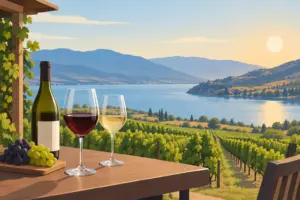

A great Okanagan tasting day is not about fitting the most winery signs into a single afternoon. It is about settling into the landscape: vineyard rows above the lake, a glass poured by someone who knows the story behind it, and enough time to notice what is in your glass. This Okanagan wine tour guide helps you plan that kind of day, whether you are visiting Kelowna for a weekend, celebrating with friends, or finally taking a local getaway.
Start With the Okanagan Region That Fits Your Day
The Okanagan Valley is long, varied, and more geographically diverse than many first-time visitors expect. Choosing a region before you choose individual wineries makes the day more relaxing and gives the experience a clearer sense of place.
Kelowna and West Kelowna are a natural choice for visitors staying near the city. The routes are convenient, the lake views are striking, and the winery mix ranges from landmark estates to smaller, family-run tasting rooms. West Kelowna is particularly well suited to a polished first wine tour: vineyards climb the hillsides above Okanagan Lake, and many properties pair dramatic architecture with serious winemaking.
Lake Country, north of Kelowna, offers a gentler, more rural pace. Its wineries are often close together, which means less time traveling and more time tasting, sightseeing, and enjoying lunch. This is an excellent area for couples, smaller groups, and guests who want beautiful views without a packed itinerary.
South Okanagan destinations such as Penticton bring another layer to the experience. Warmer conditions and distinct soils support expressive reds, bold rosés, and a broad range of aromatic whites. The drive is longer from Kelowna, so this region usually deserves a dedicated full-day outing rather than an add-on to a short visit.
Vernon and the north end of the valley also reward travelers looking beyond the best-known routes. The setting can feel quieter, with a strong agricultural character and wineries that reflect the cooler edge of the valley. There is no single best region. It depends on where you are staying, how much time you have, and whether your ideal day leans more toward iconic estates, intimate tastings, food, or scenery.
How Many Wineries Should You Visit?
For most guests, three or four wineries is the sweet spot. It gives you variety without turning the day into a race between tasting bars. A thoughtfully paced half-day tour may visit three wineries, while a full-day experience can include four or more, often with a lunch stop woven into the route.
More stops do not automatically create a better wine tour. Each tasting has its own rhythm: a welcome, a discussion of the wines, time to ask questions, a walk through the property, perhaps a bottle shop visit, and a few unplanned moments spent taking in the view. Those are often the moments people remember.
A guided itinerary also helps balance the selections. Rather than tasting the same style repeatedly, a knowledgeable local guide can build a progression that might begin with bright sparkling wine or crisp Pinot Gris, move into textured Chardonnay or aromatic Viognier, and finish with Syrah, Merlot, or a signature red blend. The result feels curated rather than random.
Book Ahead, Especially for Groups
The Okanagan has a lively tasting culture, and popular wineries can be busy during spring, summer, harvest season, and holiday weekends. Reservations are a wise idea for nearly every visit and especially important for groups, private celebrations, and guests hoping to include a specific winery.
Booking ahead does more than secure a place at the bar. It lets the winery prepare for your arrival, helps avoid long waits, and creates room for a more personal tasting. For birthday trips, bachelorette weekends, corporate gatherings, or groups with different wine preferences, a private guided tour can be the easiest way to coordinate the details while keeping the day elevated.
When choosing a tour, look beyond transportation alone. A well-organized experience should consider tasting appointments, travel timing, winery variety, pickup logistics, group size, and the option to include a quality lunch. Vines & Views builds these details into curated and custom Okanagan routes, allowing guests to sip, savor, and sightsee without assigning someone the unglamorous job of navigating, scheduling, and staying sober.
What to Wear and Bring for an Okanagan Wine Tour
Wine country style is comfortably polished, but practical choices matter. Vineyards can be warm in the afternoon, cool in the morning, and breezy near the lake. Layers are more useful than a single heavy piece, and comfortable shoes make a meaningful difference if you plan to walk among the vines or explore a winery terrace.
Bring sunglasses, sunscreen, and a small bag for purchases. If you are visiting in summer, a hat and water bottle are sensible additions. Fragrance is best kept light, since strong perfume or cologne can interfere with the aromas in the glass for you and the guests beside you.
You do not need to arrive with wine expertise. In fact, curiosity is a better starting point. Let your host know what you typically enjoy, whether that is a dry Sauvignon Blanc, a rich red, a slightly off-dry Riesling, or simply something new. The Okanagan is known for range, and a tasting is an opportunity to find a wine that surprises you.
Tasting Room Etiquette That Makes the Day Better
A winery tasting is relaxed, but a little awareness improves the experience for everyone. Listen for the story behind each pour. In the Okanagan, the conversation may touch on elevation, lake influence, rocky soils, vineyard exposure, growing seasons, and the decisions made in the cellar. Those details are not decoration. They are why two nearby wineries can produce very different wines from the same grape variety.
Pace yourself and use the spit bucket when needed. Spitting is entirely normal at professional tastings and can be particularly helpful on a multi-stop day. Have water regularly, eat a proper meal, and do not feel obligated to finish every pour. The goal is to stay present enough to taste the distinctions from one winery to the next.
It is also perfectly appropriate to ask questions. Ask what makes a wine distinctive, which food the winemaker would pair with it, how long it can age, or whether it is made in limited quantities. If you love a wine, purchasing a bottle is a meaningful way to support the winery and extend the memory of your visit back home.
Make Lunch Part of the Experience
Lunch is not merely a practical pause between wineries. In the right setting, it becomes one of the highlights of the day. A vineyard restaurant, seasonal patio, or carefully selected local stop offers a chance to reset the palate and enjoy the valley from another angle.
For a full-day tour, plan for something substantial enough to keep the afternoon enjoyable. Fresh salads, shared boards, seafood, grilled dishes, and seasonal produce tend to work beautifully alongside Okanagan wines. If your group has dietary needs, share them early so the route and meal plans can be organized with care.
There is a trade-off worth considering: a long, formal lunch may mean fewer winery visits, while a quick stop can leave more time for tasting. Neither choice is wrong. Couples may prefer a lingering meal with a lake view; a celebratory group may care more about keeping the energy moving. A thoughtful itinerary should reflect the occasion rather than force every guest into the same schedule.
Why a Guided Wine Tour Changes the Day
Driving yourself can work for a single appointment or an informal afternoon, but the logistics add up quickly. One person must skip the tasting or limit their pours. Reservations need to line up. Routes need to be mapped. Purchases need to fit in the vehicle. By the second or third winery, the planning can start to compete with the pleasure.
A guided tour removes that friction. You can enjoy the scenery between stops, hear local context along the way, and give full attention to the wines and the people you are with. It also creates access to a route designed around timing and variety, rather than whatever happens to appear first on a map.
For visitors, that local perspective is especially valuable. The Okanagan is not one wine destination with one personality. It is a collection of microclimates, growers, winemakers, lakefront views, and tasting styles. The best tour gives you a true feel for the region while leaving room for an unexpected favorite bottle, a lingering view, or a conversation you did not plan for.
The most memorable Okanagan wine days leave a little space in the schedule. Choose a region, trust a considered route, taste with curiosity, and let the valley set the pace.