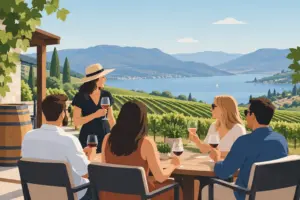

A sun-warmed patio above Okanagan Lake, a cool glass of Riesling in hand, and vineyard rows rolling toward the hills: this is not a setting that calls for wine-school formality. Learning how to taste Okanagan wines is really about becoming more present to the glass, the people pouring it, and the landscape that shaped it. A few simple habits will help you recognize what you enjoy while leaving plenty of room to sip, savor, and sightsee.
Start With the Okanagan in the Glass
The Okanagan Valley is not one single wine region in character. It stretches from cooler northern vineyards around Lake Country and Kelowna to the hot, dry slopes near Oliver and Osoyoos. Lake influence, elevation, soil, and long summer days all leave their mark on the wines.
That range is part of the pleasure. You might taste a bright, lime-driven Riesling in the morning, then find yourself with a sun-ripened Syrah, plush Merlot, or structured Cabernet Franc later in the day. Rather than looking for one “Okanagan taste,” notice how each winery interprets its corner of the valley.
A helpful question for your host is: “What makes this vineyard site different?” The answer may point to glacial soils, a breezy lakeside location, steep slopes, or a warmer southern exposure. Those details turn a tasting from a lineup of pours into a sense of place.
How to Taste Okanagan Wines Without Overthinking It
You do not need an advanced vocabulary or a dramatic swirl to taste well. The aim is to slow down enough to notice what is in front of you. Use your senses in a natural order: look, smell, sip, and reflect.
Look at color and clarity
Hold the glass against a light background, ideally without tilting it too much. White wines can range from pale straw to deeper gold, while reds may show ruby, garnet, purple, or brick tones. Color can hint at grape variety, age, or winemaking choices, but it is not a scorecard.
A young Pinot Noir may be pale and translucent yet full of character. A deeply colored red may be rich and concentrated, though it can also simply reflect the grape. Start by observing rather than making assumptions.
Give the wine a gentle swirl
A small swirl releases aroma. Keep the base of the glass on the table if you are new to it, or make a slow, controlled circle in your hand. There is no prize for the biggest swirl.
Take one short sniff first, then another. The first may reveal fresh fruit, such as lemon, peach, cherry, or blackberry. The second often brings out subtler notes: wild herbs, flowers, pepper, cedar, baking spice, or a stony mineral quality. If you smell something that reminds you of a childhood candy, a garden after rain, or fresh bread, that observation is valid. Wine is personal before it is technical.
Take a small sip, then let it travel
Take enough wine to coat your palate, but there is no need for a large mouthful. Let it rest for a moment before swallowing or using the spit bucket. Notice where the flavor lands. Does it feel crisp and mouthwatering? Round and creamy? Light and silky, or firm and drying on the gums?
Acidity creates freshness and makes you want another sip. Tannin, most common in red wine, creates that drying, grippy sensation. Alcohol can bring warmth, while residual sugar adds a touch of sweetness. Balance matters more than any single feature. A wine can be high in acidity or tannin and still feel beautifully composed.
Pause for the finish
After swallowing, pay attention to what remains. Does the flavor disappear quickly, or does it linger with fruit, spice, or savory notes? A long finish is often associated with quality, but the more useful question is simpler: did you want to take another sip?
Taste in an Order That Protects Your Palate
Most tasting rooms serve wines in a thoughtful progression, usually from sparkling and light whites to richer whites, rosés, lighter reds, and fuller-bodied reds. When possible, follow that order. A bold Cabernet Sauvignon can overwhelm the delicate citrus and floral notes of a crisp Pinot Gris if you taste it first.
There are exceptions. A winery may want to begin with its signature wine, or you may be choosing a focused flight built around a single variety. That is perfectly reasonable. The point is to avoid jumping back and forth between very delicate and very powerful styles.
If you are visiting several wineries, pacing matters as much as tasting technique. Finish every pour only if you genuinely want to. Spitting is common, professional, and practical, especially if you want to remain alert through a full day of tasting. Drink water regularly, enjoy a substantial lunch, and give yourself permission to skip a wine that is not to your taste.
Let Terroir Guide the Conversation
The word terroir refers to the natural conditions that influence a wine: soil, climate, slope, aspect, elevation, and the human choices made in the vineyard. In the Okanagan, terroir is tangible. Look out over a vineyard and you may see the lake moderating temperatures, rocky benches catching afternoon sun, or dry hillsides that force vines to work hard for water.
Ask whether the grapes come from an estate vineyard or a partner grower, whether the site is cooler or warmer than nearby vineyards, and when the wine was harvested. These questions invite a real conversation without making the tasting feel like an exam.
For instance, cooler sites often suit varieties that shine with aromatic lift and bright acidity, including Riesling, Gewürztraminer, Pinot Gris, and Pinot Noir. Warmer southern sites can produce generous Merlot, Syrah, Cabernet Sauvignon, and Bordeaux-style blends. These are broad patterns, not rules. A skilled producer can surprise you, and that is worth celebrating.
Find Your Own Preferences
A tasting room is one of the best places to identify what you like because you can compare wines side by side. Instead of saying you “like red” or “do not like white,” get more specific. Perhaps you enjoy whites with citrus and tension, rosés that are dry rather than sweet, or reds with savory herbs and moderate oak.
Keep a simple note on your phone after each stop. Record the winery, wine name, grape, and one or two impressions. “Peach, dry, refreshing” is more useful than trying to write a perfect tasting note. If you are considering a bottle to take home, ask how it will develop over time and what food it suits.
Do not feel pressured to buy a bottle from every winery. A thoughtful selection of wines you truly enjoyed is more rewarding than a trunk full of bottles chosen in a rush. Temperature during travel also matters, particularly on hot summer days, so ask about safe storage if you will be touring for several hours.
Pair the Wine With the Moment
The Okanagan experience is about more than what is inside the glass. A lively sparkling wine before lunch, a chilled rosé on a terrace, or a structured red alongside a seasonal meal can reveal different sides of the same wine. Food softens tannin, highlights fruit, and can make acidity feel even more refreshing.
A creamy goat cheese can flatter a bright Sauvignon Blanc. Charcuterie can bring out the savory edge of a Pinot Noir. Grilled meats, mushrooms, and aged cheeses often meet the depth of Syrah or Merlot beautifully. Still, personal preference wins. If a pairing surprises you, remember it for your next meal.
Scenery plays a role, too. It does not change the chemistry of a wine, but it can change your attention. When you are not worrying about navigation, reservations, or who will drive, you have more space to notice the vineyard, listen to the winemaker’s story, and enjoy the people around you. That is why a guided day with Vines & Views can be such a relaxed way to experience the valley.
Leave Room for Discovery
The most memorable Okanagan tastings rarely come from trying to identify every aroma correctly. They come from a wine that catches you off guard, a host who explains a vineyard’s history, or a table where everyone finds something different to love.
Bring curiosity, drink water, ask honest questions, and trust your palate. The bottle you remember months later may not be the most expensive one. It may simply be the wine that made you pause, look across the vines, and feel that the Okanagan had offered you something distinctly its own.